





Wattage Calculator: Match Devices to Car Inverter Size
- Why correct inverter sizing matters
- Risk of undersizing and oversizing
- Continuous power vs surge (peak) power
- Vehicle electrical constraints
- How to calculate required inverter size (step-by-step)
- Step 1: List all devices and find wattage
- Step 2: Sum continuous and identify highest surge
- Step 3: Apply efficiency and safety margin
- Worked example
- Practical considerations: wiring, battery, waveform, and thermal
- DC input current and fuse sizing
- Battery capacity and runtime estimation
- Waveform: modified sine vs pure sine
- Thermal management and mounting
- Selection matrix and model examples
- Quick selection table
- Comparing inverter types (technical snapshot)
- Standards and certifications
- Manufacturer-grade guidance and why select a reputable supplier
- Reliability, testing and manufacturing controls
- Warranty, OEM support and customization
- Guangzhou Congsin — Company profile and product strengths
- Installation checklist and best practices
- Before installation
- During installation
- After installation
- Frequently Asked Questions (FAQ)
- 1. How do I know if my car alternator can support an inverter?
- 2. Can I use a 300 W inverter to run a 1000 W microwave for a short time?
- 3. Do I need a pure sine wave inverter for my laptop?
- 4. How long will my battery run a 500 W load?
- 5. What gauge wire should I use for a 2000 W inverter?
- 6. Is it OK to run an inverter from the car's cigarette lighter socket?
- Contact and product inquiry
Finding the correct power inverter for use in a vehicle starts with one question: what devices do you plan to run and how much power do they actually draw? This guide provides a clear wattage-calculation method and sizing strategy to match devices to a car inverter size, taking into account continuous power, surge (peak) demands, waveform type (modified vs pure sine), battery and alternator limits, and safety margins. It also explains practical wiring, efficiency, and thermal considerations so you can choose an inverter that is safe, reliable and fit-for-purpose—whether you need a small inverter for phone charging or a high-capacity inverter for portable power stations and AC appliances in an RV.
Why correct inverter sizing matters
Risk of undersizing and oversizing
Undersizing an inverter can lead to frequent shutdowns, blown fuses, or damage to both the inverter and the vehicle's electrical system due to overload and heat. Oversizing adds unnecessary cost, weight and inefficiency. Selecting the right size avoids these trade-offs and extends the lifetime of both the inverter and the vehicle battery system.
Continuous power vs surge (peak) power
Most appliances list a running (continuous) wattage and sometimes a higher startup or surge wattage. Motors, compressors and some electronic power supplies can draw 2–6 times their rated running current for a few milliseconds to seconds. When sizing, always allow for the inverter's surge capability:
- Continuous rating: the inverter's sustained output in watts.
- Surge rating: the short-term power the inverter can deliver (usually 2–10 seconds).
Manufacturers publish both figures; cross-check them when comparing models. General reference on inverter concepts is available from the electrical inverter overview (Wikipedia: Inverter (electrical)).
Vehicle electrical constraints
Cars typically have 12 V nominal systems (14.4 V when charging). The alternator and battery must supply the inverter — large continuous loads may exceed alternator capacity or rapidly deplete batteries. Always compare inverter current draw at typical input voltage against alternator maximum output and battery amp-hour capacity.
How to calculate required inverter size (step-by-step)
Step 1: List all devices and find wattage
Make an inventory of every device you plan to run simultaneously. For each device, record:
- Rated (running) wattage or amperage.
- Startup/surge wattage (if applicable).
- Power factor information for motors or inductive loads (if available).
If a device lists amperage (A) instead of watts (W), convert using W = V × A. For AC appliances rated at 120/230VAC, use the appliance voltage; for DC input devices powered directly from the battery, use 12–14.4 V as applicable.
Step 2: Sum continuous and identify highest surge
Add all continuous wattages to get a total running load. For surge, identify the single largest startup draw and ensure the inverter can handle that surge on top of the running load if the startup occurs while other devices are on.
Step 3: Apply efficiency and safety margin
Inverter efficiency varies (typically 85%–95%). To size conservatively: divide required AC wattage by expected inverter efficiency (e.g., 0.9) and then add a safety margin of 20% to allow for harmonics, cable losses and unexpected transients. Example formula:
Required inverter wattage = (Total continuous AC watts) / Efficiency × 1.2
Worked example
Devices: laptop 65 W (adapter), mini-fridge 120 W running / 600 W startup, LED lights 20 W total.
- Total continuous = 65 + 120 + 20 = 205 W
- Largest surge = 600 W (fridge)
- Assume inverter efficiency = 90% (0.9)
- Required continuous inverter rating = 205 / 0.9 × 1.2 = 273 W → choose at least 300 W continuous
- Required surge handling = must tolerate 600 W startup while under load — select an inverter with at least 1000 W surge capability for margin.
Practical considerations: wiring, battery, waveform, and thermal
DC input current and fuse sizing
To calculate DC current from 12 V battery for an AC load:
I_DC = (AC_power / inverter_efficiency) / V_input
Using the worked example: I_DC = (300 W / 0.9) / 12 V ≈ 28 A. Choose cables and fuse ratings higher than this continuous current (typically 125% for continuous loads per battery wiring best practices). Use appropriately rated battery terminals, AWG cable sizes and an inline fuse within 18 (45 cm) of the battery.
Battery capacity and runtime estimation
Estimate runtime from battery amp-hours (Ah):
Runtime_hrs ≈ (Battery_Ah × Battery_V × DoD) / (AC_power / inverter_efficiency)
For example, a 100 Ah 12 V deep-cycle battery with 50% usable depth-of-discharge (DoD): Energy_available = 100 × 12 × 0.5 = 600 Wh. With AC load 205 W and 90% efficiency, runtime ≈ 600 / (205 / 0.9) ≈ 2.6 hours.
Waveform: modified sine vs pure sine
Pure sine wave inverters produce clean AC suitable for sensitive electronics, variable-speed motors and devices with active power supplies. Modified sine (quasi-square) inverters are cheaper but can cause increased heating, humming, reduced efficiency, or erratic behavior on some equipment (medical devices, certain chargers, audio equipment). For electronics, laptops, and modern appliances, prefer pure sine wave. See inverter waveform discussion (Wikipedia: Sine wave inverters).
Thermal management and mounting
High-power inverters produce heat. Allow airflow around the unit and avoid mounting in enclosed spaces next to battery compartments or combustible materials. Follow manufacturer installation manuals for clearance and ventilation; many inverter warranties require proper mounting and ventilation.
Selection matrix and model examples
Quick selection table
| Typical use | Continuous Watts | Recommended inverter size | Waveform | Notes |
|---|---|---|---|---|
| Phone / small USB devices | 10–30 W | 150 W | Modified or pure | Low cost, low current draw |
| Laptop + lights | 60–150 W | 300–500 W | Pure recommended | Protect chargers; account for surge |
| Small fridge / microwave | 200–1000 W | 1000–2000 W | Pure sine | High surge; check compressor startup |
| Power tools / AC motors | 500–3000 W | 2000–4000+ W | Pure sine | Consider direct-DC or generator alternatives for extended runtime |
Comparing inverter types (technical snapshot)
| Characteristic | Modified sine | Pure sine |
|---|---|---|
| Cost | Lower | Higher |
| Compatibility with electronics | Limited; may cause noise/heat | High; safe for sensitive devices |
| Efficiency | Good | Better for variable loads |
| Recommended for | Basic charging and incandescent-type loads | Laptops, medical devices, compressors, audio |
Standards and certifications
Choose products with recognized certifications for safety and EMC (e.g., CE, ETL, FCC, RoHS, E-MARK and ISO9001 quality systems). These signals indicate the product has passed standardized tests and is less likely to underperform or create hazardous conditions in vehicles. For the ISO standard overview see ISO 9001.
Manufacturer-grade guidance and why select a reputable supplier
Reliability, testing and manufacturing controls
High-quality inverters are produced on automated lines with rigorous testing: thermal cycling, surge testing, EMI/EMC checks and long-duration run-in. Suppliers that publish test results and product datasheets make it easier to verify surge capabilities, efficiency curves and thermal limits before purchase.
Warranty, OEM support and customization
Choosing a supplier with OEM/ODM capacity enables tailored solutions: custom connectors, vehicle-specific mounting brackets, modified firmware for low-battery cutoffs, or bespoke packaging. Good supplier support reduces integration risk for fleet, RV or commercial installations.
Guangzhou Congsin — Company profile and product strengths
Guangzhou Congsin Electronic Technology Co., Ltd., founded in early 1998, is a professional power inverter manufacturer with over 27 years of focused experience. We design, R&D and manufacture a wide range of power solutions—with a core emphasis on DC→AC power inverters, portable power stations, and solar charge controllers. Our catalog includes 100+ models tailored for vehicles, solar systems, RVs and trucks, off-grid homes, outdoor offices, patrol and field construction work.
We operate fully automated production lines, advanced instrumentation and multifunctional testing equipment to ensure product reliability, efficiency and intelligent functionality. Environmental and safety compliance are built in: our quality system is ISO9001 certified and many products hold international approvals such as CE, EMC, LVD, ETL, FCC, RoHS and E-MARK. Several independently developed patents further demonstrate our commitment to innovation.
Congsin’s products serve global markets across Europe, the Americas, the Middle East, Africa and Southeast Asia; many models are supplied to domestic and international OEM channels. Our support includes OEM/ODM, private labeling, distribution and bespoke customization to meet partner specifications. Our mission is to deliver reliable, efficient and affordable energy solutions that enable energy independence.
Core products and competitive advantages: Solar Charge Controller, modified sine wave inverter, pure sine wave inverter, portable power stations. Congsin differentiates through long-term manufacturing experience, broad product range for vehicle-focused applications (car inverters, RV systems), and strong compliance/testing capability that supports international distribution.
Installation checklist and best practices
Before installation
- Confirm combined continuous and surge wattages for intended simultaneous loads.
- Check vehicle alternator rating and battery condition; upgrade if planning long runtimes.
- Select inverter with appropriate surge capability and waveform for your devices.
During installation
- Use appropriately gauged cables (see manufacturer chart) and keep DC run short.
- Install fuses or circuit breakers next to the battery to protect wiring.
- Ensure ventilation and secure mounting away from water and heat sources.
After installation
- Test with real loads and measure DC input current under typical conditions.
- Observe inverter temperature during operation; confirm no repeated thermal shutdowns.
- Monitor battery voltage and alternator behavior during sustained charging loads.
Frequently Asked Questions (FAQ)
1. How do I know if my car alternator can support an inverter?
Compare the inverter's DC input current at expected loads to your alternator's rated output. Alternators are rated in amps (A). If the inverter + other vehicle electrical loads exceed alternator capacity, the battery will discharge while the engine runs, potentially causing overheating or alternator damage. Consult vehicle specs or a mechanic for exact alternator limits.
2. Can I use a 300 W inverter to run a 1000 W microwave for a short time?
No. A microwave typically requires near its rated wattage continuously, not just a surge. Running a 1000 W microwave requires an inverter with at least 1000 W continuous rating and adequate surge capacity. Attempting with a 300 W inverter will cause overload shutdown or damage.
3. Do I need a pure sine wave inverter for my laptop?
Most modern laptop power supplies can run on modified sine inverters, but pure sine is recommended to avoid extra heat, audible noise or reduced efficiency, and to ensure compatibility with sensitive power supplies. For peace of mind and long-term reliability, choose pure sine.
4. How long will my battery run a 500 W load?
Calculate available energy: Battery Wh = Ah × V × DoD. For example, a 100 Ah 12 V battery at 50% DoD provides 600 Wh. With a 500 W AC load and 90% inverter efficiency, runtime ≈ 600 / (500 / 0.9) ≈ 1.08 hours. Larger loads shorten runtime quickly.
5. What gauge wire should I use for a 2000 W inverter?
Wire gauge depends on DC current at the system voltage. For a 2000 W inverter at 12 V and 90% efficiency: I_DC ≈ (2000 / 0.9) / 12 ≈ 185 A. Typical installation would use 1/0 AWG or 2/0 AWG cable with proper connectors and fuses; consult manufacturer wiring charts and local electrical codes.
6. Is it OK to run an inverter from the car's cigarette lighter socket?
Only low-power inverters (typically under 150 W) designed for cigarette-lighter use and fused accordingly. Higher-power inverters should be hardwired to the battery with appropriate cable and fuse protection.
Contact and product inquiry
If you need help choosing the right power inverter car solution or a custom OEM/ODM configuration for vehicles, RVs or off-grid systems, contact Guangzhou Congsin Electronic Technology Co., Ltd. for product catalogs, datasheets, and technical support. Explore models including pure sine wave inverters, modified sine wave inverters, portable power stations and solar charge controllers. For detailed quotes, custom specifications, or to request test reports and certifications, reach out to Congsin through their official channels.
Further reading and references:
- Inverter (electrical) — Wikipedia
- ISO 9001 — Wikipedia
- Manufacturer datasheets and installation manuals for specific inverter models (review product datasheets before purchase).
UPS vs Inverter: Choosing the Right Backup Power System
Maintenance Best Practices to Extend UPS Power Inverter Life
Portable Car Power Inverters for Camping and Emergencies
Certifications and Safety Standards for UPS Inverters
OEM & ODM Services
Do you provide support for shipping and customs clearance?
Yes, we offer international logistics solutions including export documentation and customs advice.
Distributor
What kind of distributors are you looking for?
We seek distributors with experience in the amusement or entertainment equipment industry and a strong local market presence.
What kind of support can I expect from Feifan after becoming a distributor?
You will receive ongoing sales support, product training, technical assistance, and marketing resources to ensure your success.
Pure Sine Wave Inverters
Does it include protection features?
Yes, it has sixfold safety protection for reliable performance.
Modified Sine Wave Inverters
What power range of devices can it supply?
It supports devices within 360W in UPS mode and within 500W in regular mode. Ensure the device power does not exceed the corresponding limit.
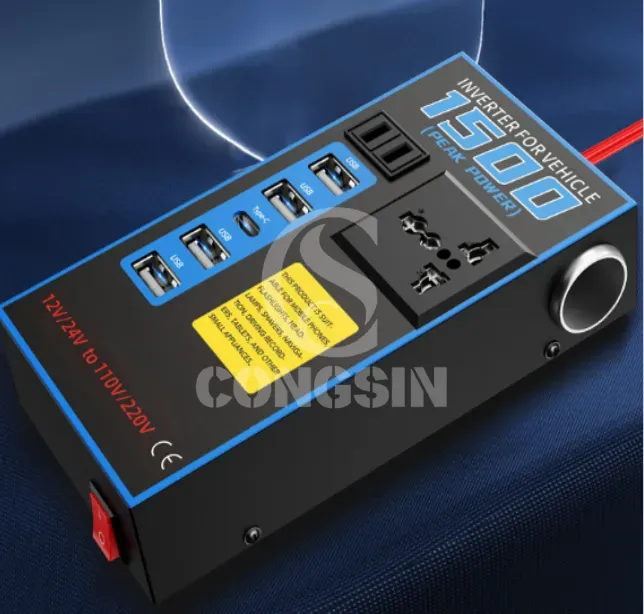
Congsin 1500W Inverter for Vehicle DC 12V/24V to AC 110V/220V with Universal socket Modified Sine Wave
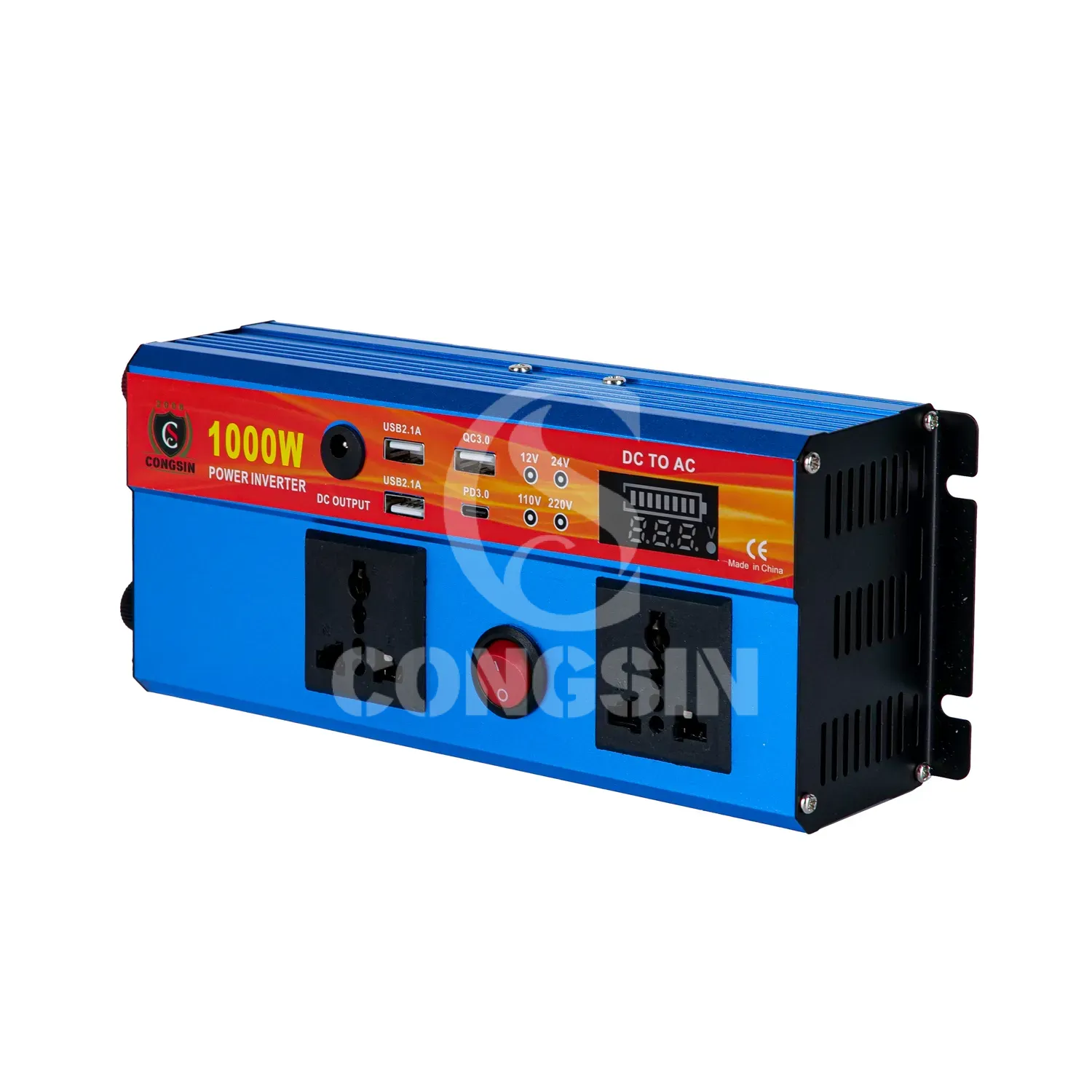
Congsin 1000W modified sine wave inverter with LED display and Type C port car RV power inverter
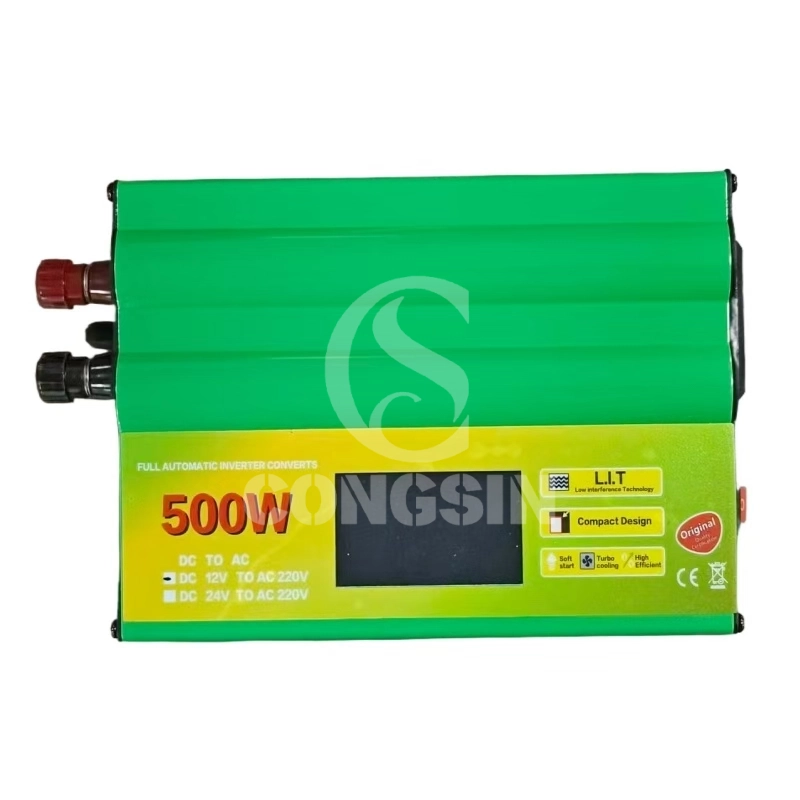
Congsin Modified Sine Wave Inverter 500W 1000W 1500W 12V LED Display Portable for RV Car Solar
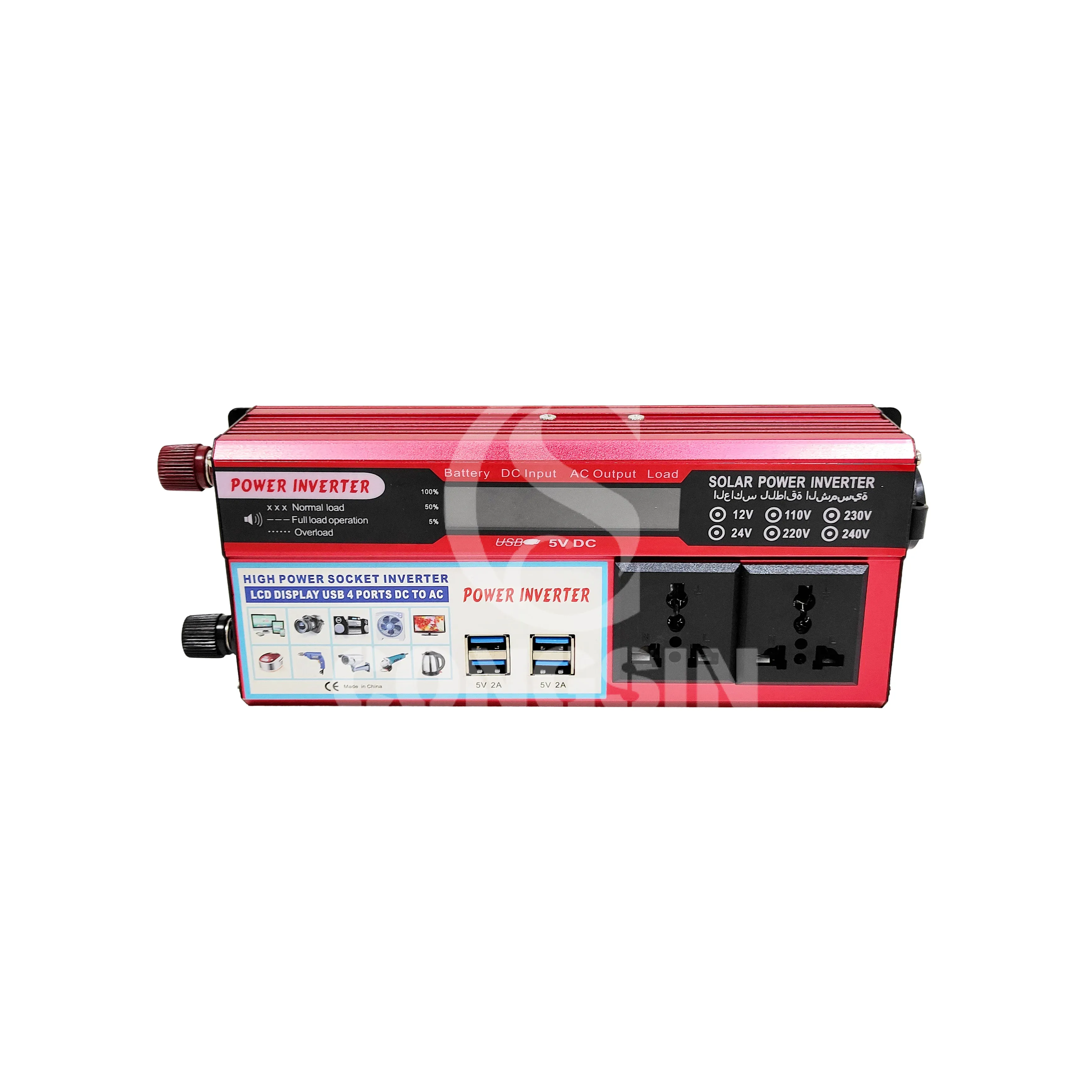
Congsin 1500W modified sine wave inverter with LCD display and USB ports for RV car boat home use

CONGSIN is a trusted OEM factory for power inverters, solar charge controllers, and DC converters. Reliable solutions for global B2B buyers.
 High Quality
 7/24 Service
 Guaranteed Warranty
© 2025 Congsin. All Rights Reserved.